
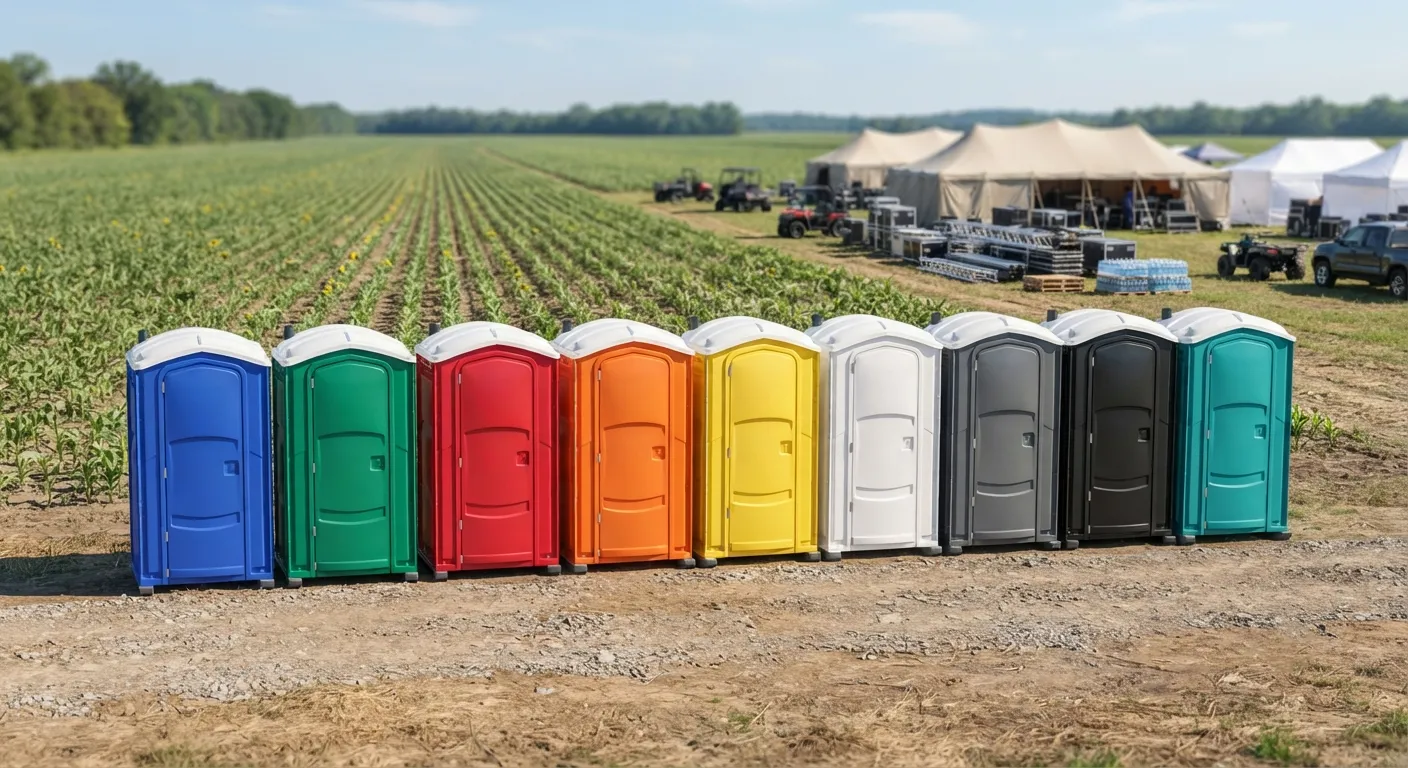
How many restrooms does a farm operation need?
Start with head count and walking distance. OSHA 1928.110 covers agricultural field sanitation and requires potable water, toilets, and handwashing for hand-labor employees, with facilities placed so nobody walks more than a quarter mile to reach one. That is different from the construction ratio under OSHA portable toilet requirements, which uses 1926.51(c): one toilet for 20 workers or fewer, then a toilet and urinal per 40 up to 200. Most farms around Ellicott City fall under the field sanitation rule rather than the construction table, since harvest crews and packing lines are not construction work. If your operation also runs a construction phase, like a new barn or grading work, check construction site services for that separate ratio. Either way, the math is simple once you know your crew size and your field layout: more acreage usually means more units, spread out, not one big cluster at the entrance. A standard porta potty rental covers most field crews. For farms hosting agritourism, festivals, or a fall event with public visitors, pull from our how many porta potties do I need guide instead, since visitor counts behave differently than employee counts. We deliver across the Ellicott City area and into Catonsville, 6.4 miles east, and Columbia, 7.4 miles south, for operations that span more than one property.
What do farms need besides toilets?
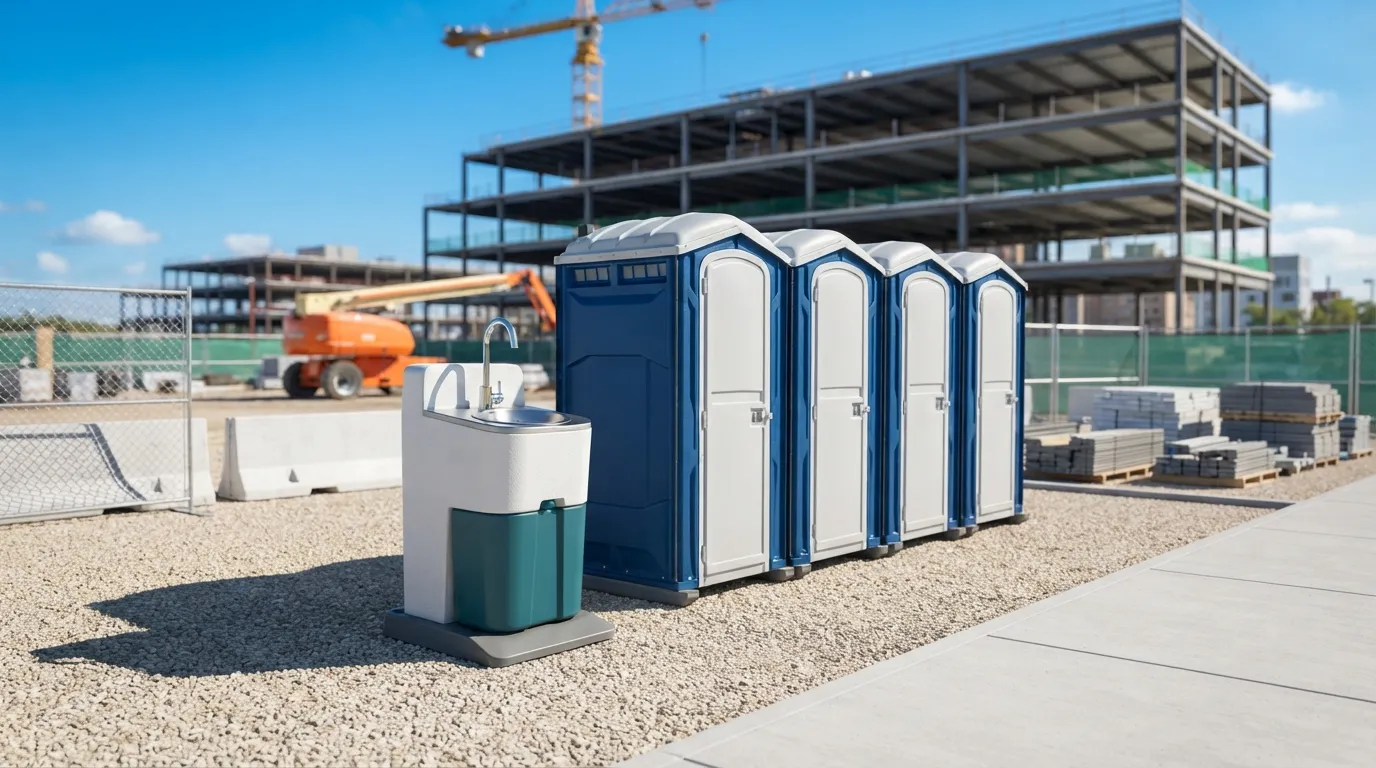
Water and handwashing, mostly. OSHA 1928.110 requires potable water alongside toilets for hand-labor crews, and 29 CFR 1910.141(d)(2) requires soap plus towels or a hand-drying device wherever handwashing is provided; hand sanitizer alone does not satisfy that rule. A handwashing station rental or portable sink rental placed near the packing shed or loading area handles this cleanly. If your crew handles pesticides, herbicides, or treated produce, OSHA 1926.51(f)(1) requires washing facilities specifically for exposure to paints, coatings, herbicides, or insecticides, so a wash station near the mixing or spraying area is worth the placement even if you already have one at the barn. Farms running a septic system for the farmhouse or a processing building should also plan ahead: a residential septic tank is typically pumped every 3 to 5 years, depending on tank size and household load, and a grease interceptor at a farm kitchen or commercial stand needs pumping once fats, oils, and grease reach 25 percent of liquid depth. See septic pumping service, how often to pump a septic tank, and grease trap pumping for the specifics. If you need a standing toilet during a plumbing repair, a holding tank rental covers the gap.
Does farm terrain change where units get placed?
Yes, ground conditions decide the spot more than the calendar does. Fields get soft after rain, driveways narrow near equipment sheds, and a delivery truck needs about 60 feet of straight clearance behind it to set a unit down safely. That rules out some field edges and tight barn lanes. A gravel pad near the equipment yard, or a mowed strip along the fence line, usually works better than the middle of a working field. Our porta potty placement guide walks through footing, slope, and service truck access in more detail. Standard units measure about 44 by 48 inches on the ground and stand roughly 92 inches tall, so clearance under low barn doors or overhangs matters too. For farms with visitors, an ADA accessible porta potty unit should be part of the layout; ADA Standards 213.2 calls for at least 5 percent of clustered single-user units to be accessible, with a minimum of one, and ADA Standards 304.3.1 requires a 60 inch turning circle inside. Seasonal operations near Ellicott City sometimes need a restroom trailer rental instead, especially for a harvest festival or wedding venue on the property, and pumping schedules follow ANSI/PSAI Z4.3, which sets one service visit per week as the baseline for up to 10 users over a 40 hour week.
| unit | month | week | day |
|---|---|---|---|
| standard | 200 | 200 | 150 |
| ada | 185 | n/a | 230 |
Longer farm contracts price out better than day rentals; check monthly porta potty rental or porta potty rental cost before committing to a season-long term.
How often do farm porta potties get serviced?
Once a week is standard under ANSI/PSAI Z4.3 for up to 10 users over a 40 hour week, but high-traffic stands or harvest crews often need twice-weekly visits. See how often are porta potties cleaned for what a service visit actually includes.
Do we need a permit for farm restrooms in Ellicott City?
Placement in the public right of way needs confirming with the city; farm fields set back from the road typically avoid that question entirely. Check porta potty permit requirements before placing anything near a roadside stand.
Can we rent just one unit for a small farm crew?
Yes, if the crew is under 20 and within the quarter mile walk OSHA 1928.110 requires. One standard porta potty rental plus a handwashing station usually covers a small operation through the season.
What about a farm stand open to the public?
Public visitors change the math from an employee ratio to a visitor-count guide. Use how many porta potties do I need and consider an ADA unit for accessibility.
Is a wash station required if we spray pesticides?
Yes. OSHA 1926.51(f)(1) requires washing facilities for herbicide and insecticide exposure specifically, separate from general field sanitation. Place one near the mixing station, not just the barn.
Next step
Get a delivery date
Tell us the address, the dates and the headcount. We size the order and confirm the route.